ITI Trade Demand in India: Skills, Hiring Trends and What Employers Should Consider
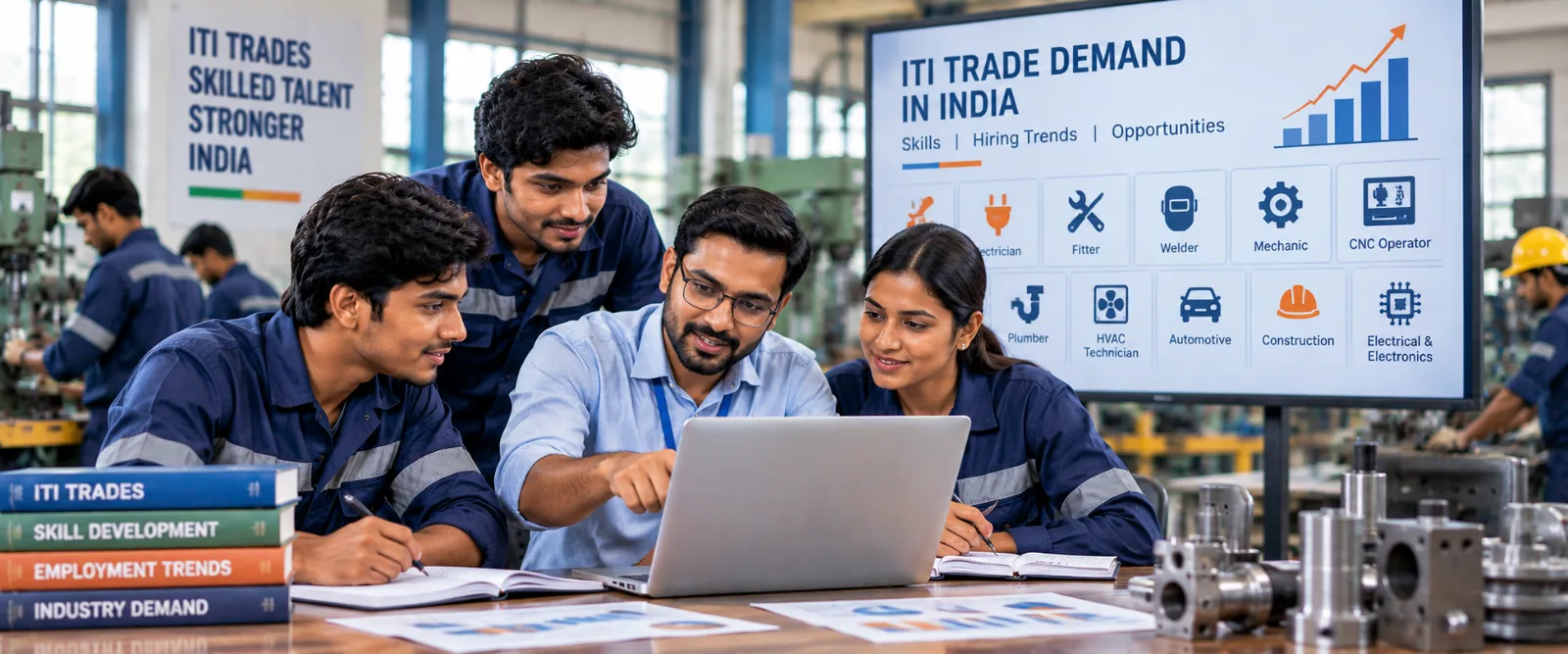
ITI Trade Demand in India: Skills, Hiring Trends and What Employers Should Consider
ITI hiring is often described in terms of individual trades, but employer demand is more complex. The same trade can have very different requirements depending on industry, location, machinery, experience and workplace conditions. Understanding these factors can help employers and institutes make better decisions about skilled workforce planning.
Why ITI Trade Demand Needs a More Detailed View
DGT's Craftsmen Training Scheme is designed to provide skilled workers to industry across a broad range of trades. The current DGT CTS framework covers 169 NSQF-compliant trades.
A broad trade count, however, does not tell an employer which trade is most relevant for a particular vacancy. Hiring demand needs to be interpreted against the actual work, industry, location and skill requirements.
1. Start With the Job, Not the Trade Name
An employer should begin with the work that the employee will perform. For example, an electrical maintenance role may require an Electrician trade qualification plus industrial maintenance experience. A production role may require Fitter, Machinist, Turner or CNC-related skills depending on the plant and equipment.
DGT maintains official trade information and designated-trade resources that employers can use when defining trade terminology.
2. Consider the Difference Between Qualification and Capability
An ITI qualification establishes a structured training background, but the employer's actual requirement may include additional technical skills, experience, certifications, shift availability or exposure to specific equipment.
A good hiring process therefore separates qualification from capability. Job descriptions should state the trade or qualification and then clearly specify the technical and practical requirements.
3. Location Can Change Candidate Availability
Skilled-worker availability is not uniform across every city or industrial cluster. Location should therefore be treated as a core hiring variable. Employers should assess whether candidates are local, willing to relocate, available for shift work and able to join within the required timeframe.
4. Fresher Demand and Experienced Hiring Are Different
Fresh ITI candidates can be relevant for apprenticeships, entry-level technical roles, production operations and structured training programmes. Experienced workers may be required where the role involves independent maintenance, specialised machinery, supervision or industry-specific knowledge.
The sourcing channel and screening process should reflect the difference. Institute connections may be particularly useful for batch-based fresher hiring, while experienced hiring may require profile search and targeted outreach.
5. Technology Exposure Is Becoming More Relevant
The Economic Survey 2025-26 notes that automation, AI and digitalisation are changing the nature of work and creating demand for new skills. Employers should identify whether a role requires exposure to CNC systems, PLCs, digital controls, automated production lines, CAD/CAM, industrial IoT or other technology relevant to the actual workplace.
6. A Practical Trade-Demand Framework
Trade: What qualification or trade is relevant?
Skills: What technical skills are essential?
Experience: Is the role suitable for freshers, apprentices or experienced workers?
Location: Where are candidates needed and can they relocate?
Industry: What type of plant, site or operating environment is involved?
Technology: What equipment, software or automated systems will the worker use?
Supply: Which ITIs, institutes or talent channels can provide candidates?
Screening: How will practical skills and certificates be verified?
7. How ITIs Can Use Employer Demand
Institutes can use employer requirements to improve placement preparation. Tracking which trades attract recurring opportunities, which locations employers recruit from and which additional skills appear frequently in job descriptions can help placement teams guide students more effectively.
8. What Employers Should Measure Over Time
Employers can build their own trade-demand view by tracking vacancies, applications, shortlist rates, interview conversion, joining rates, retention and recurring skill requirements. Over time, this can reveal which sourcing channels and candidate profiles are producing useful hiring outcomes.
Frequently Asked Questions
Which ITI trades are in demand in India?
Demand varies by industry, location, employer and role. Rather than assuming one trade is universally in demand, employers should assess actual vacancies and the technical requirements attached to them.
How should employers choose an ITI trade for a job?
Start with the work involved, then map the required technical skills and qualification to the relevant trade. DGT's official trade resources can be used as a reference.
Are fresh ITI candidates suitable for industrial jobs?
Yes, depending on the role. Fresh candidates can be relevant for entry-level roles, apprenticeships and structured training programmes. Employers should clearly distinguish fresher requirements from roles requiring independent experience.
Why should employers track trade demand?
Tracking trade demand helps employers understand recurring vacancies, candidate availability, sourcing gaps and the skills repeatedly required.
Connect Trade Demand With Skilled Talent
TumharaJob helps employers discover ITI, Diploma and skilled technical talent and helps institutes connect students with relevant employment opportunities. Explore skilled hiring or find ITI jobs on TumharaJob.
Sources & References
Official and institutional sources used to support factual information in this article.
DGT — Craftsmen Training Scheme — Official CTS information and trade-training framework. Read source →
DGT — Designated Trades under the Apprentices Act — Official list of designated apprenticeship trades. Read source →
Economic Survey 2025-26 — Employment and Skill Development — Government analysis of skill mismatch and changing technology-related skill requirements. Read source →
Related Articles
 ★ Featured
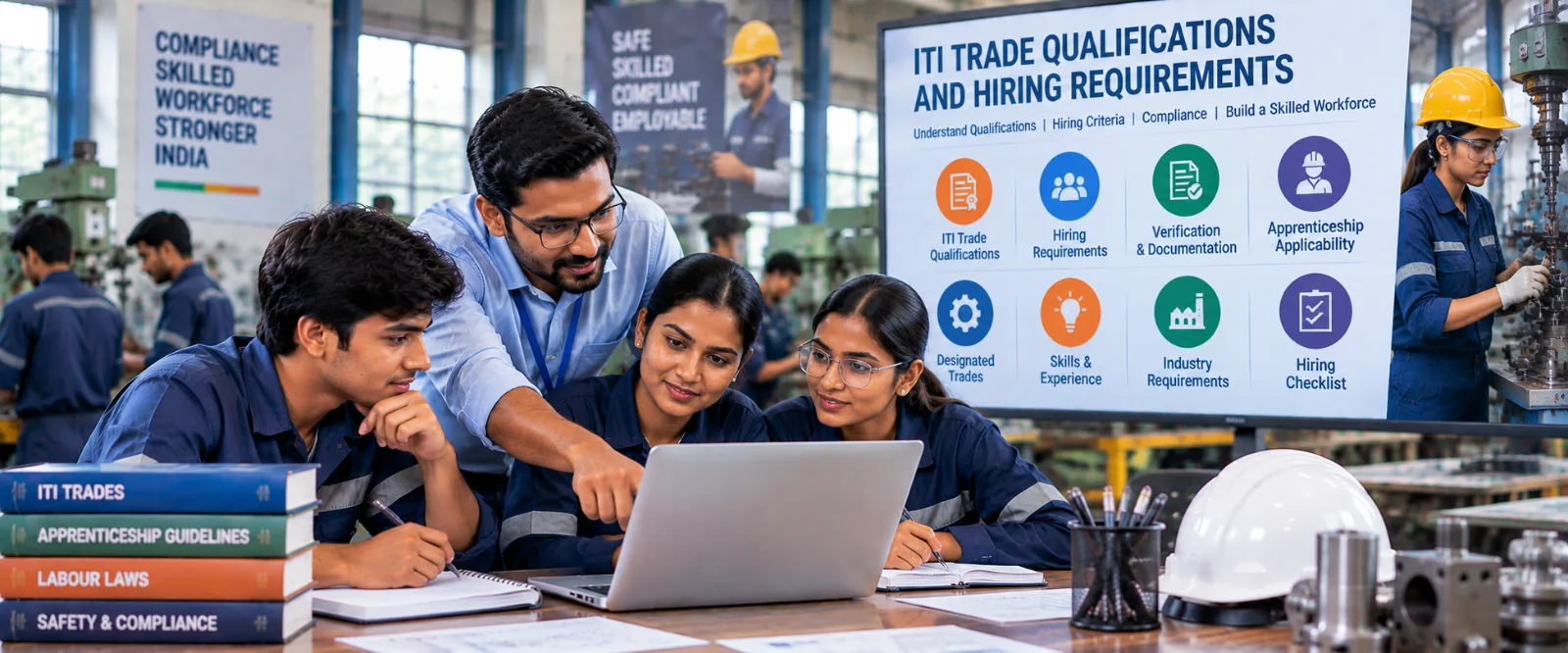
ITI Trade Qualifications and Hiring Requirements: A Practical Employer Guide
Learn how to translate ITI trade qualifications into clear hiring requirements by checking trade relevance, skills, experience, certificates and apprenticeship applicability.
 ★ Featured
Apprenticeship Training in India: What Employers and ITIs Need to Know
A practical overview of apprenticeship training in India, covering apprentice categories, designated and optional trades, employer coverage, training infrastructure and stipend basics.
 ★ Featured
Skilled Workforce Trends in India: What Employers Should Watch
Explore the key trends shaping India's skilled workforce, from vocational training and skill gaps to technology adoption and changing employer requirements.