Skilled Workforce Trends in India: What Employers Should Watch
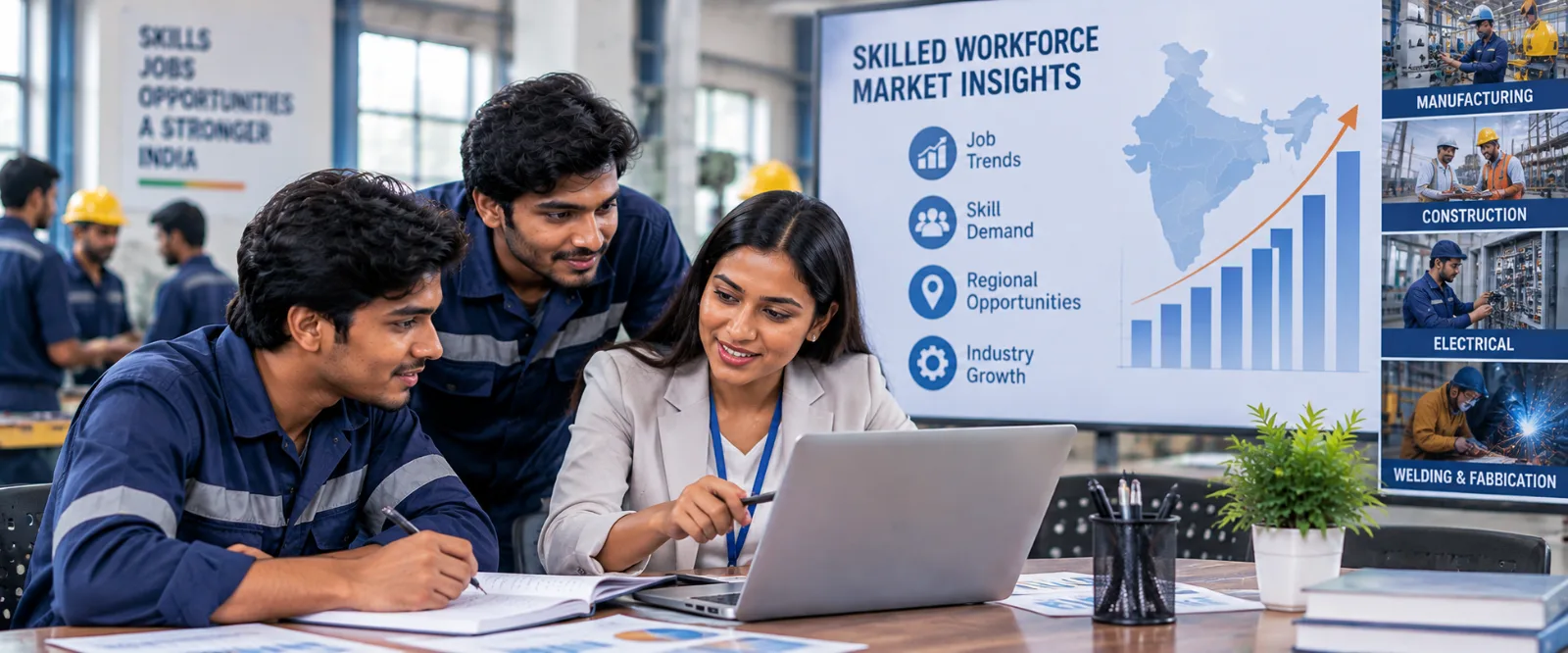
Skilled Workforce Trends in India: What Employers Should Watch
India's skilled workforce is changing alongside manufacturing, infrastructure, technology and the wider labour market. For employers, the challenge is no longer simply finding candidates with a trade qualification; it is identifying people whose skills, experience and training match the work that needs to be done.
India's Skilled Workforce Is Evolving
The Directorate General of Training (DGT) describes the Craftsmen Training Scheme as a national vocational training framework delivered through ITIs and designed to provide skilled workers to industry across NSQF-compliant trades. DGT also highlights ongoing changes in training, including new-age courses and technology interventions.
For employers, the skilled-talent market should therefore be viewed through trade qualification, practical capability, technology exposure, location, experience and willingness to learn.
1. Demand Is Moving Beyond Traditional Trade Labels
Electricians, Fitters, Welders, Machinists and technicians remain important to industrial and infrastructure operations, but the work environment around these roles is changing. Automation, digitalisation and new production technologies are increasing the need for workers who can combine hands-on trade knowledge with technology-related skills.
The Economic Survey 2025-26 notes that technological advances are changing the nature of work and creating demand for new skill sets, while also highlighting the need to align training with labour-market requirements.
2. Skill Mismatch Remains an Important Hiring Issue
The Economic Survey 2025-26 identifies skill mismatch as an ongoing challenge, including gaps in foundational skills, differences between industry requirements and training, and the need to adapt to emerging technologies and processes.
For employers, qualification alone is therefore an incomplete screening criterion. A practical hiring process should consider trade, technical skills, relevant experience, certifications, workplace requirements and ability to perform the job.
3. ITIs Are Increasingly Connected to Industry-Relevant Skills
DGT describes the CTS as a structured vocational training framework intended to create a skilled workforce for industry. Its ecosystem includes established trades as well as newer courses designed around emerging areas.
Employers can benefit from building relationships with relevant ITIs and placement teams, particularly when hiring freshers, apprentices or large batches of entry-level technical workers.
4. Technology Is Changing the Skills Employers Need
Automation, AI, digital systems, connected equipment and modern production technologies are changing many technical workplaces. The Economic Survey notes that automation, AI and digitalisation are reshaping industries and creating demand for new skill sets.
This does not mean every traditional trade is being replaced. It means employers increasingly need to identify the technology exposure that matters for a particular role and incorporate it into job descriptions and screening.
5. Apprenticeships Can Support the School-to-Work Transition
Apprenticeship training provides a structured route for combining technical knowledge with workplace experience. DGT recognises both designated and optional trades and describes multiple categories of apprentices.
For employers, apprenticeship programmes can form part of a broader talent-pipeline strategy. For ITIs and candidates, they can provide an additional pathway from training into workplace exposure.
6. What Employers Should Track
Which trades generate recurring hiring requirements?
Which technical skills repeatedly appear in job descriptions?
Where are candidates available geographically?
How many openings are for freshers, apprentices or experienced workers?
Which roles require additional certifications or practical assessments?
Which skills are becoming more important because of automation or digitalisation?
Which ITIs, institutes or training networks can provide relevant candidate supply?
7. What This Means for Skilled Hiring Platforms
A useful hiring platform needs to make technical requirements searchable and understandable. Employers may need to filter by trade, qualification, experience, location and skills rather than relying only on broad job categories.
For candidates, complete profiles containing trade, skills, experience, certificates and preferred locations can make it easier for employers to identify relevant talent. For institutes, structured placement data can help connect student supply with actual employer demand.
Frequently Asked Questions
What is changing in India's skilled workforce?
The workforce is being shaped by continued demand for vocational and technical skills alongside changes caused by automation, digitalisation and emerging technologies. The Economic Survey 2025-26 highlights the need for stronger alignment between training and labour-market requirements.
Are traditional ITI trades still relevant?
Yes. DGT continues to operate the Craftsmen Training Scheme across a wide range of trades while also updating training and introducing new-age courses.
Why does skill mismatch matter to employers?
A candidate may hold the required qualification but still need additional practical skills or workplace experience. Employers can reduce this gap by defining requirements in terms of trade, skills, experience and practical responsibilities.
How can employers prepare for changing skill requirements?
Employers can review recurring hiring requirements, update job descriptions, work with relevant ITIs and training providers, use practical assessments where appropriate and consider apprenticeship or structured entry-level pathways.
Build a Stronger Skilled Hiring Pipeline
TumharaJob connects employers with ITI, Diploma and skilled technical talent across relevant trades and locations. Explore skilled hiring options or post your requirement on TumharaJob.
Sources & References
Official and institutional sources used to support factual information in this article.
Directorate General of Training (DGT) — Official information on ITI-based vocational training and CTS. Read source →
Economic Survey 2025-26 — Employment and Skill Development — Government analysis of skilling, employment and labour-market alignment. Read source →
DGT — Apprenticeship Training — Official information on apprenticeship categories, coverage and training. Read source →
Related Guides
Longer reads on hiring and recruitment from TumharaJob.
Best Platforms for Hiring Verified Skilled Workers in India
Compare skilled worker recruitment platforms in India. Learn how candidate verification, skills-based filtering, ATS and institute hiring can improve skilled workforce recruitment.
Best Recruitment Platforms for Hiring ITI-Certified Tradespeople in India
Looking to hire ITI-certified tradespeople in India? Compare recruitment platforms for verified skilled talent, trade-specific hiring, candidate screening and ATS capabilities.
Related Articles
 ★ Featured
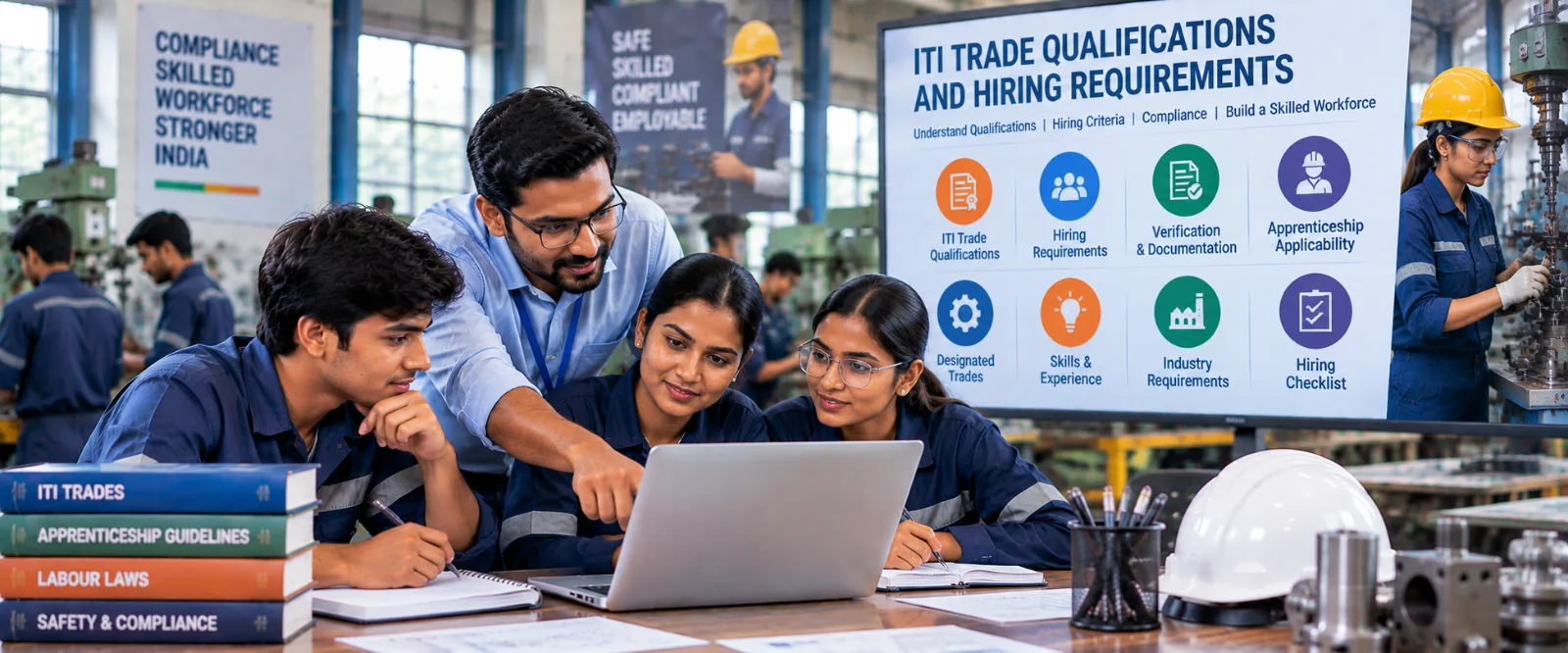
ITI Trade Qualifications and Hiring Requirements: A Practical Employer Guide
Learn how to translate ITI trade qualifications into clear hiring requirements by checking trade relevance, skills, experience, certificates and apprenticeship applicability.
 ★ Featured
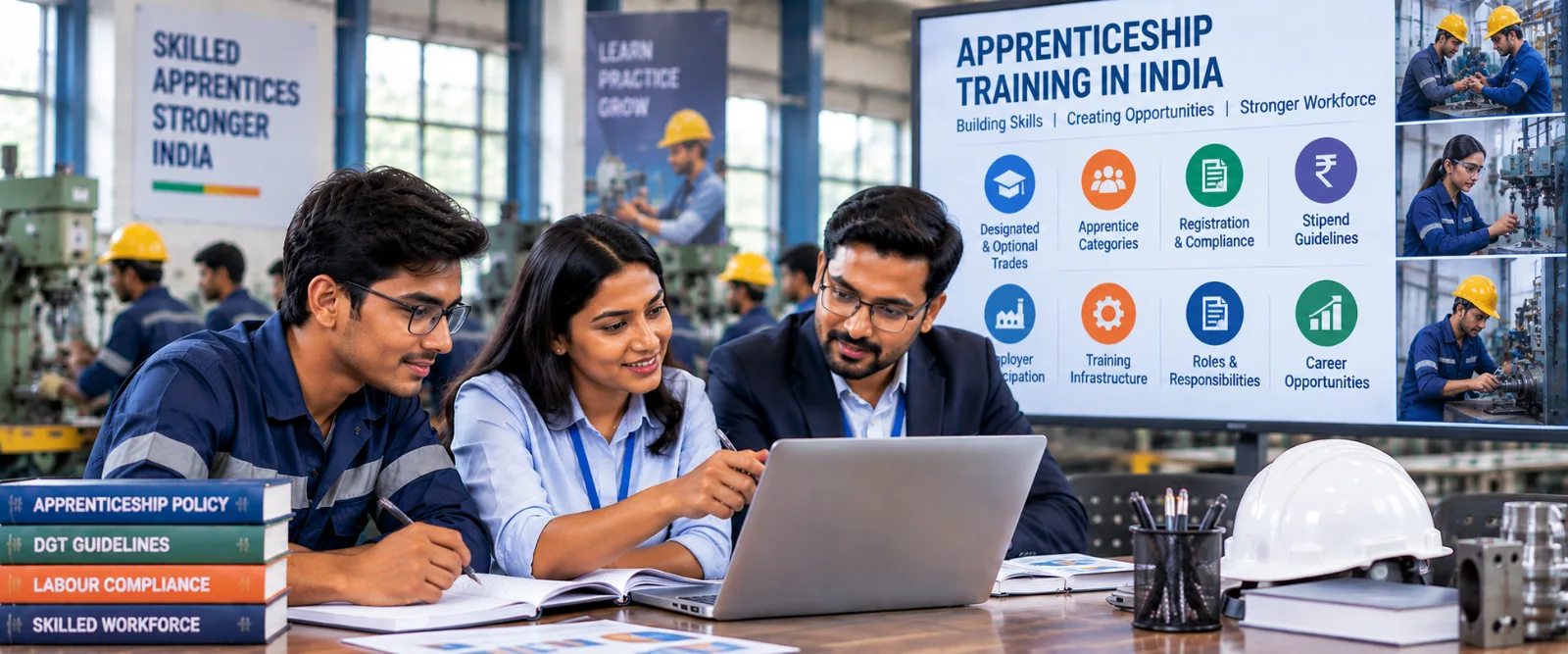
Apprenticeship Training in India: What Employers and ITIs Need to Know
A practical overview of apprenticeship training in India, covering apprentice categories, designated and optional trades, employer coverage, training infrastructure and stipend basics.
 ★ Featured
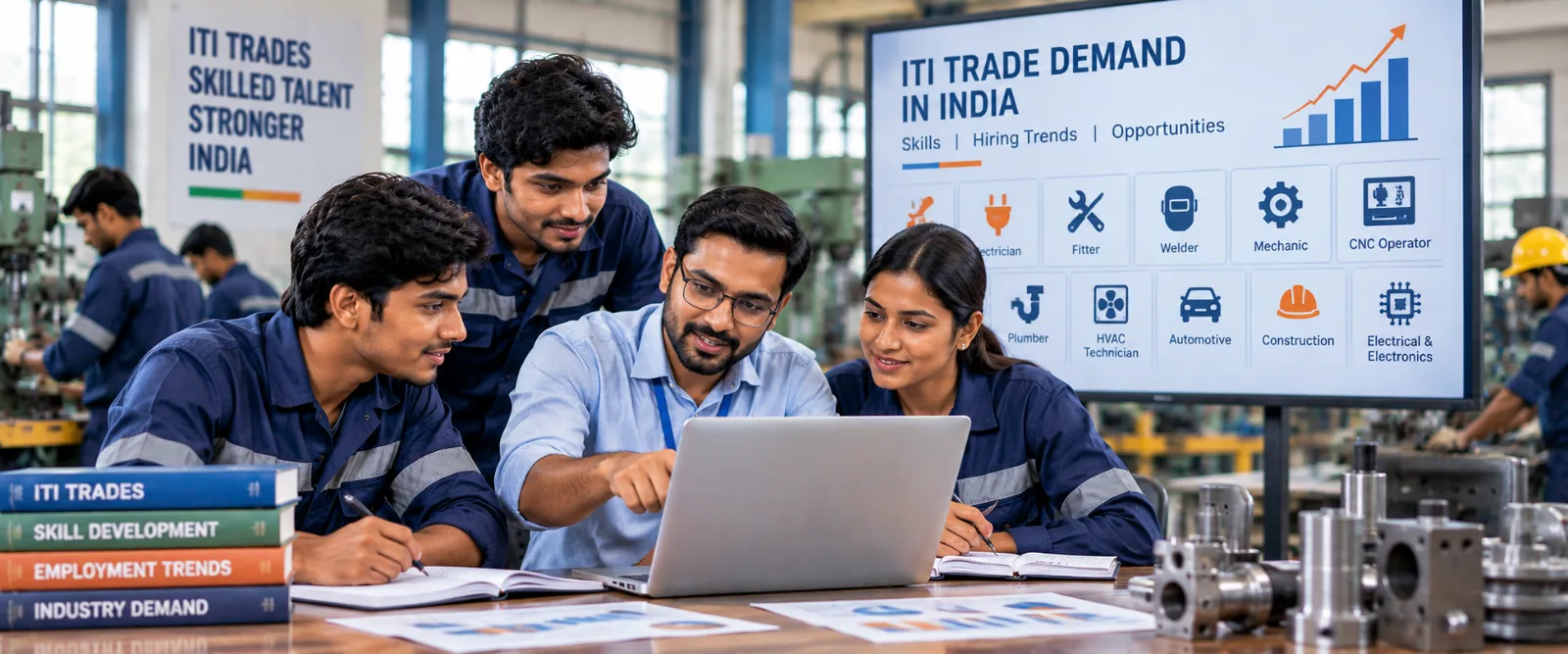
ITI Trade Demand in India: Skills, Hiring Trends and What Employers Should Consider
Understand how employers can assess ITI trade demand by looking at trade relevance, skills, location, experience, technology exposure and workforce requirements.