Apprenticeship Training in India: What Employers and ITIs Need to Know

Apprenticeship Training in India: What Employers and ITIs Need to Know
Apprenticeship training provides a structured bridge between vocational education and workplace experience. For employers and ITIs, understanding the basic framework is important before creating apprenticeship opportunities, selecting candidates or setting up training arrangements.
What Is Apprenticeship Training?
Apprenticeship training combines workplace-based practical training with structured learning. DGT states that apprenticeship training can be provided in designated and optional trades and recognises five categories: trade, graduate, technician, technician vocational and optional trade apprentices.
For employers, apprenticeships can form part of a workforce pipeline. For ITIs and candidates, they can provide practical exposure in an actual workplace.
1. Designated Trades and Optional Trades
DGT defines a designated trade as a trade or occupation notified by the Government. An optional trade is a trade or occupation decided by an employer. Employers should identify the applicable trade or occupation before setting up an apprenticeship engagement.
DGT also maintains an official list of designated trades under the Apprentices Act, including technical trades such as Advance Welder, CNC Programmer-cum-Operator and several others.
2. Which Employers Have Apprenticeship Obligations?
DGT's current apprenticeship information states that employers with manpower strength of 40 or more and the requisite training infrastructure are required to engage apprentices. It states that the engagement band is 2.5% to 10% of total manpower strength, including contractual staff.
Because applicability can depend on the establishment and the current legal framework, employers should verify their position against the latest official rules and notifications before relying on a particular interpretation.
3. Training Infrastructure Matters
Apprenticeship is not simply a recruitment arrangement. DGT's framework refers to workplace training and practical training, and the establishment needs the infrastructure and arrangements necessary to provide that training.
Employers should identify the workplace, supervisor or training manager, practical activities, safety arrangements and learning structure before apprentices join.
4. Understanding Apprentice Categories
The apprenticeship framework includes five categories: trade apprentices, graduate apprentices, technician apprentices, technician vocational apprentices and optional trade apprentices.
The appropriate category depends on the candidate's qualification and the nature of the apprenticeship. Employers and institutes should verify eligibility and applicable requirements for the specific engagement.
5. Stipend Basics
DGT's current apprenticeship page lists minimum stipend rates by year. For the rates published there, the first year is 70% of the minimum wage of semi-skilled workers notified by the relevant State or Union Territory, the second year is 80%, and the third and fourth years are 90%.
Employers should check the latest official stipend provisions applicable to the specific apprenticeship category and engagement before publishing an offer.
6. What ITIs Should Prepare
Maintain accurate student and qualification records.
Identify students who meet eligibility requirements for relevant apprenticeship opportunities.
Track employer requirements by trade and location.
Support students with application and interview processes.
Maintain records of apprenticeship engagement and outcomes.
Coordinate with employers and relevant apprenticeship authorities where required.
7. What Employers Should Prepare
Confirm whether the apprenticeship provisions apply to the establishment.
Identify the relevant trade or occupation.
Confirm the apprentice category and candidate eligibility.
Assess workplace training infrastructure and supervision.
Define the practical training activities.
Check the applicable stipend and current government requirements.
Maintain the required apprenticeship documentation and records.
Use the latest official rules, notifications and portal requirements when completing the engagement.
8. Apprenticeship Is Part of Workforce Planning
Apprenticeships can be integrated into a broader skilled-talent strategy. An employer can use apprenticeship programmes to create a structured entry route for candidates while building practical familiarity with the workplace.
For ITIs, apprenticeship outcomes can also provide useful placement information, particularly when institutes track employer, trade, location, joining and completion data.
Important Compliance Note
This article provides general information for employers and institutes and is not legal advice. Apprenticeship rules, notifications, portal processes and rates can change. Always verify the current provisions with the relevant government authority and official apprenticeship systems before implementing an apprenticeship programme.
Frequently Asked Questions
Is apprenticeship training mandatory for every employer?
Not every employer is covered in the same way. DGT currently states that establishments with manpower strength of 40 or more and requisite training infrastructure have an obligation to engage apprentices within the specified band. Employers should verify current applicability to their establishment.
What is the difference between a designated and optional trade?
DGT defines a designated trade as a trade or occupation notified by the Government, while an optional trade is decided by an employer.
How many categories of apprentices are there?
DGT identifies five categories: trade, graduate, technician, technician vocational and optional trade apprentices.
What stipend should an apprentice receive?
The applicable minimum depends on the apprenticeship category and current rules. DGT's current page provides year-wise minimum rates for trade apprentices; employers should verify the latest official provisions before making an offer.
Where can employers verify apprenticeship requirements?
Employers should use the latest information and notifications published by DGT and the relevant apprenticeship authorities and portals. DGT also publishes the Apprentices Act, Apprenticeship Rules and related amendments.
Build a Structured Apprenticeship Talent Pipeline
TumharaJob can help employers connect with ITI, Diploma and skilled candidates and help institutes build more structured placement and employer-connect workflows. Book a demo to explore the platform.
Sources & References
Official and institutional sources used to support factual information in this article.
DGT — Apprenticeship Training — Official information on apprenticeship categories, employer coverage, training and stipend provisions. Read source →
DGT — Designated Trades under the Apprentices Act — Official list of designated trades. Read source →
DGT — Guidelines, Orders and Circulars — Official repository for the Apprentices Act, Apprenticeship Rules and related documents. Read source →
Related Articles
 ★ Featured
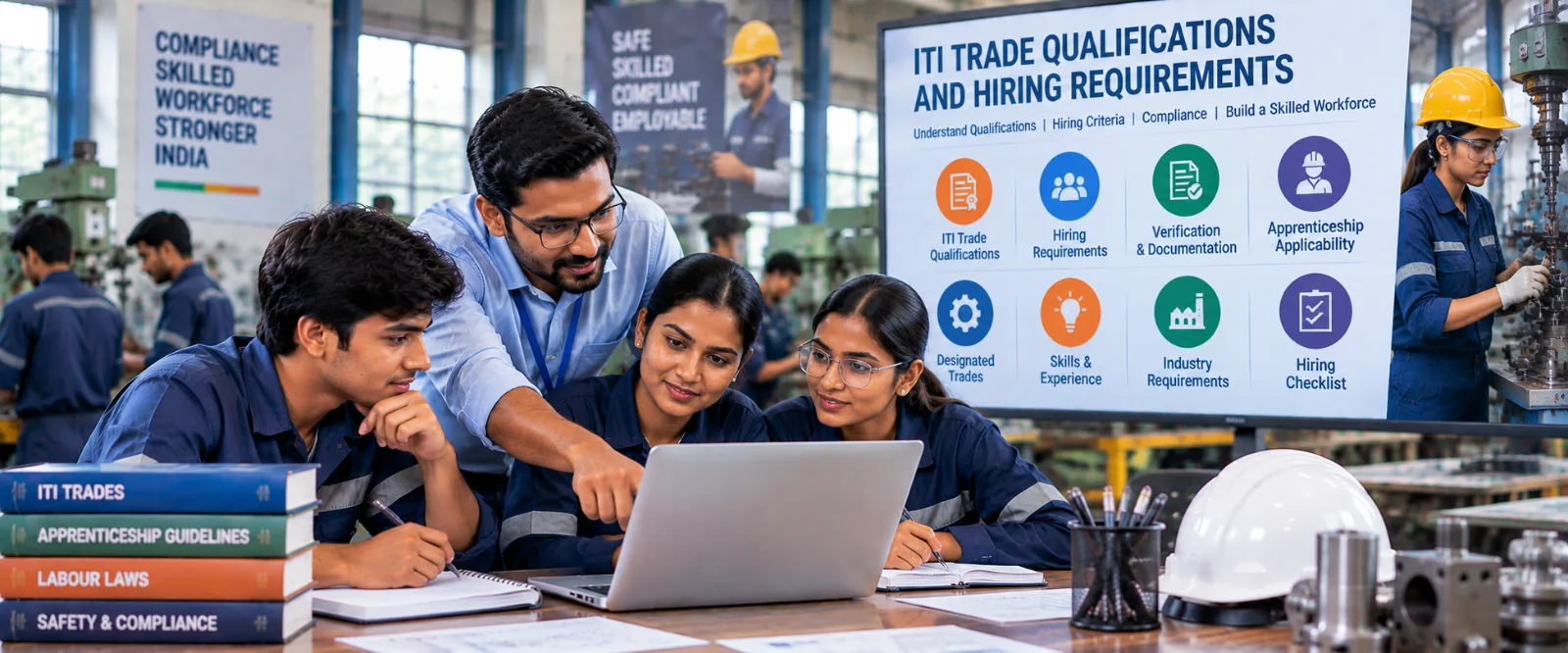
ITI Trade Qualifications and Hiring Requirements: A Practical Employer Guide
Learn how to translate ITI trade qualifications into clear hiring requirements by checking trade relevance, skills, experience, certificates and apprenticeship applicability.
 ★ Featured
ITI Trade Demand in India: Skills, Hiring Trends and What Employers Should Consider
Understand how employers can assess ITI trade demand by looking at trade relevance, skills, location, experience, technology exposure and workforce requirements.
 ★ Featured
Skilled Workforce Trends in India: What Employers Should Watch
Explore the key trends shaping India's skilled workforce, from vocational training and skill gaps to technology adoption and changing employer requirements.