ITI Trade Qualifications and Hiring Requirements: A Practical Employer Guide
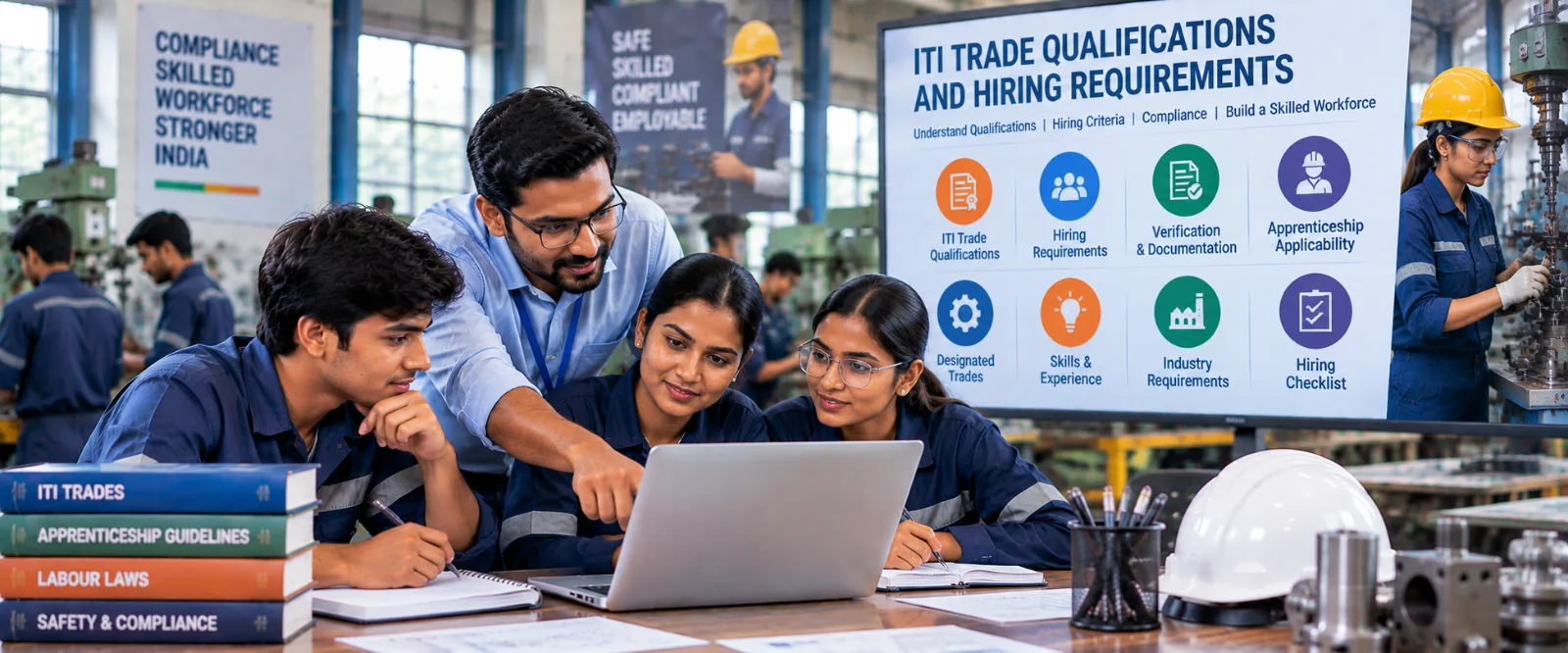
ITI Trade Qualifications and Hiring Requirements: A Practical Employer Guide
Employers recruiting ITI-qualified talent often begin with a trade name, but effective hiring requires more detail. A clear requirement connects the trade or qualification with the actual technical work, experience, workplace conditions and—where relevant—apprenticeship requirements.
Why Trade Qualification Should Be Defined Clearly
An ITI qualification can provide an important foundation for technical hiring, but employers still need to define the actual work requirements. DGT's CTS provides structured vocational training across a wide range of trades, while its apprenticeship system separately identifies designated trades.
A clear hiring requirement should therefore distinguish between the qualification, the practical skills and the workplace conditions required for the role.
1. Start With the Exact Trade
Use the appropriate trade name rather than a broad label such as 'technician' wherever a specific trade is relevant. DGT maintains official trade information for CTS and a separate list of designated apprenticeship trades.
For example, an employer may need an Electrician, Fitter, Welder, Machinist or CNC-related profile. The exact trade should be followed by the additional skills needed for the specific job.
2. Separate Qualification From Job Skills
A job description should clearly distinguish:
Required ITI or other qualification
Technical skills
Equipment or machinery experience
Relevant industry experience
Safety or certification requirements
Location and shift requirements
Apprenticeship or fresher eligibility, if applicable
This helps candidates understand the requirement and gives recruiters a more consistent screening framework.
3. Check Whether Apprenticeship Rules Apply
If the role is being structured as an apprenticeship, employers need to assess the applicable apprenticeship category, trade or occupation, eligibility, training infrastructure and current regulatory requirements. DGT identifies designated and optional trades and publishes the applicable apprenticeship framework.
A normal employee vacancy and an apprenticeship engagement should not be treated as interchangeable recruitment processes.
4. Use Official Trade References
DGT's official trade resources should be the starting point when employers need to verify trade names or understand the vocational training framework. The current CTS information describes training across 169 NSQF-compliant trades.
For apprenticeship hiring, DGT separately maintains the list of designated trades.
5. Define Fresher and Experienced Requirements Separately
An employer looking for a fresh ITI candidate may prioritise trade, qualification, location, learning ability and willingness to undergo workplace training. An experienced role may require years of experience, independent troubleshooting, machine exposure, supervisory ability or specialised technical knowledge.
Combining both profiles in one vague job description can make screening less effective.
6. Candidate Verification Should Match the Job
Verification should focus on information that is relevant to the role. Depending on the requirement, this may include qualification details, trade, certificates, previous employment, experience, location and other job-relevant information.
Employers should ensure that any verification process complies with applicable privacy and data-protection requirements and that candidates understand what information is being collected and why.
7. A Practical ITI Hiring Checklist
Name the exact trade or qualification required.
State whether freshers, apprentices or experienced candidates are eligible.
List the essential technical skills.
Specify relevant machinery, equipment or process experience.
Define location, shift and joining requirements.
State required certificates or licences where applicable.
Separate mandatory criteria from preferred criteria.
Use official DGT resources when checking trade terminology.
If the engagement is an apprenticeship, verify the current apprenticeship rules and applicable category.
Keep candidate and verification records organised and appropriately protected.
8. How Institutes Can Support Better Employer Matching
ITI placement teams can improve employer matching by maintaining structured records for trade, batch, qualification, skills, certificates, location preferences and placement status. This allows employers to receive more relevant candidate information and helps institutes track outcomes after interviews and joining.
The same structured information can also support placement reporting and employer relationship management.
Important Compliance Note
This article is an informational guide, not legal advice. Qualification requirements, apprenticeship provisions, government notifications and operational processes can change. Employers and institutes should verify current requirements with DGT and the relevant government authorities before making a compliance-sensitive hiring decision.
Frequently Asked Questions
How should an employer define an ITI job requirement?
Start with the exact trade or qualification, then specify the technical skills, experience, equipment exposure, location, shift and other genuinely necessary requirements.
Where can employers verify ITI trade information?
DGT's Craftsmen Training Scheme and trade resources provide official information on vocational trades. For apprenticeship engagements, employers should also consult DGT's designated-trade resources.
Does an ITI qualification automatically mean a candidate can be hired as an apprentice?
Not necessarily. Apprenticeship eligibility depends on the applicable category, qualification, trade or occupation and current rules. Employers should verify the specific requirements before engagement.
Should employers list every preferred skill as mandatory?
No. Separating essential requirements from preferred skills generally creates a clearer job description and gives recruiters a more consistent screening framework.
What records should an ITI placement team maintain?
Useful records can include student trade, batch, qualification, skills, certificates, employer opportunities, applications, interviews, offers, joining and placement outcomes.
Make ITI Hiring More Structured
TumharaJob helps employers connect with ITI, Diploma and skilled technical candidates and supports structured candidate discovery across trades and locations. Post a job or explore skilled hiring options.
Sources & References
Official and institutional sources used to support factual information in this article.
DGT — Craftsmen Training Scheme — Official information on ITI vocational training and CTS trades. Read source →
DGT — Designated Trades under the Apprentices Act — Official list of designated apprenticeship trades. Read source →
DGT — Apprenticeship Training — Official apprenticeship categories and employer provisions. Read source →
DGT Skill India Digital — ITI — Government platform for ITI-related skilling, certification, jobs and apprenticeships. Read source →
Related Articles
 ★ Featured
Apprenticeship Training in India: What Employers and ITIs Need to Know
A practical overview of apprenticeship training in India, covering apprentice categories, designated and optional trades, employer coverage, training infrastructure and stipend basics.
 ★ Featured
ITI Trade Demand in India: Skills, Hiring Trends and What Employers Should Consider
Understand how employers can assess ITI trade demand by looking at trade relevance, skills, location, experience, technology exposure and workforce requirements.
 ★ Featured
Skilled Workforce Trends in India: What Employers Should Watch
Explore the key trends shaping India's skilled workforce, from vocational training and skill gaps to technology adoption and changing employer requirements.