Best ITI Trades for Jobs in India: How to Choose the Right One
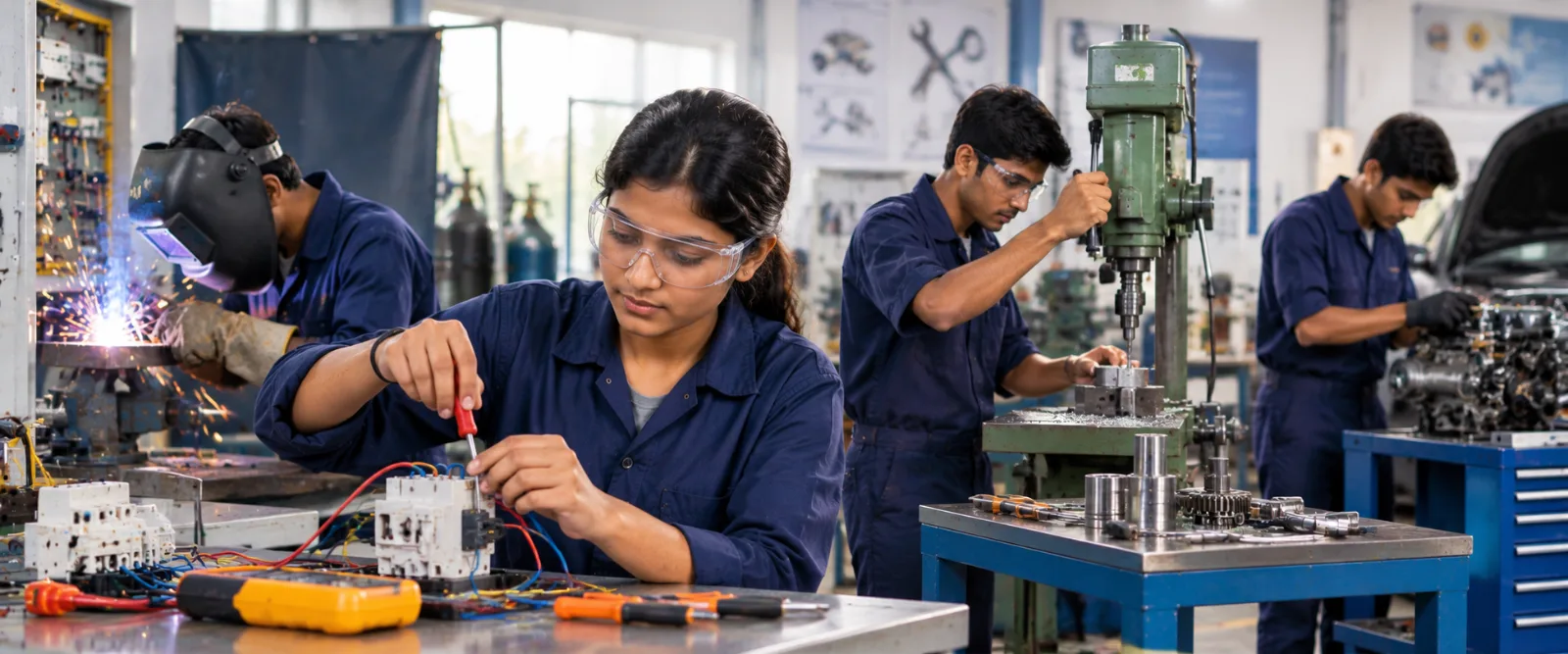
Best ITI Trades for Jobs in India: How to Choose the Right One
There is a common question students ask after Class 10: 'Which ITI trade is best?'
It sounds like there should be one clear answer. There isn't.
There is no single "best" ITI trade for every student. DGT's current Craftsmen Training Scheme covers a broad range of trades, including engineering, non-engineering and newer occupational areas, with individual trades having their own eligibility, duration and NSQF level.
This is why trade selection should be based on more than a general ranking. Consider your interests, aptitude, preferred type of work, location, employer opportunities and the skills you want to develop over time.
The right trade depends on what you enjoy, what you are good at, the kind of work you can see yourself doing every day, where you want to work and what employers in your preferred location are looking for.
Some trades are connected to large areas of industry and can lead to many types of technical work. But no trade can guarantee a job. Demand changes by industry, location, employer and time.
How to think about the 'best' ITI trade
Instead of starting with a ranking, start with five questions:
What kind of work do I enjoy: electrical, mechanical, fabrication, vehicles, electronics, computers or something else?
Do I prefer working with machines, tools, systems or people?
Am I comfortable with physical and workshop-based work?
Which industries are available around the places where I may want to work?
What skills do current job descriptions ask for in the roles I am interested in?
DGT currently lists 169 NSQF-compliant CTS trades, so there is a much wider choice than the few familiar trades students often hear about first.
1. Electrician
Electrician is one of the most recognisable ITI trades and can lead to work involving electrical installation, maintenance, equipment and basic troubleshooting.
It can be relevant across manufacturing, construction, facilities, maintenance and other settings where electrical systems are used.
Choose it if you like understanding electrical systems and are comfortable taking safety seriously. Electrical work is not a trade where shortcuts are acceptable.
2. Fitter
Fitter training can lead towards work involving machine assembly, fitting, maintenance, measurement and related mechanical activities.
Fitters can be relevant in manufacturing and engineering environments, where precision and understanding of tools and components matter.
This can suit someone who enjoys working with machines, measurements and mechanical parts.
3. Welder
Welding is closely connected with fabrication, manufacturing, construction and repair work.
The trade requires practical ability, attention to detail and strong safety habits. Different workplaces may use different welding processes and equipment.
If you enjoy hands-on fabrication and working with metal, welding may be worth exploring.
4. Machinist
Machinist-related training is suited to people interested in machine tools, manufacturing processes, measurements and precision work.
The work can involve producing or finishing components and operating or working around machine tools, depending on the role.
It can be a good fit if you like machines and are comfortable working carefully with measurements and specifications.
5. Turner
Turner is another machining-focused trade. The work can involve operating turning machines and producing components to required dimensions.
This route may suit students who enjoy mechanical work, machine tools and precision.
6. Electronics Mechanic
Electronics Mechanic can suit students interested in electronic components, equipment, testing, maintenance and troubleshooting.
The work is different from traditional mechanical trades and can be useful for people who enjoy understanding how electronic systems function.
7. Mechanic Motor Vehicle
If you enjoy vehicles and practical mechanical work, Mechanic Motor Vehicle can be a natural trade to consider.
Career opportunities can relate to vehicle servicing, maintenance, repair and workshop environments, depending on the employer and role.
8. Refrigeration and Air Conditioning
Refrigeration and Air Conditioning training can lead towards HVAC-related technician work in residential, commercial, industrial and service environments.
This trade can suit people who prefer a combination of technical systems, practical work and troubleshooting.
9. COPA
Computer Operator and Programming Assistant (COPA) is different from the workshop-heavy trades above. It can suit students interested in computers, office technology and entry-level digital or IT-support-related work.
If you enjoy computers more than machines or electrical systems, this type of trade may be worth exploring.
10. Draughtsman
Draughtsman-related trades can suit students interested in technical drawings, design documentation and computer-aided drafting, depending on the specialisation.
This can be a better fit for someone who enjoys accuracy, drawing, measurements and design-related tools.
New and emerging ITI options
ITI training is not limited to traditional trades. Current DGT/NSTI information includes newer courses such as Solar Technician, IoT Technician-related training, Additive Manufacturing Technician and Artificial Intelligence Programming Assistant at some NSTI locations, alongside conventional trades.
This does not mean a new-age trade is automatically better than a traditional trade. Ask whether the course matches your interest, aptitude and the kind of work you want to pursue.
Which ITI trade has the most jobs?
There is no reliable single answer that applies across India.
A trade may have many openings in one industrial cluster and fewer in another. Employer demand can also change with manufacturing activity, construction cycles, new projects, technology and local business conditions.
Instead of relying on a 'top 10' ranking, search current vacancies for the cities or industries you are considering. Look for repeated qualification and skill requirements. That gives you a more realistic picture of what employers are asking for now.
Don't choose a trade only because of salary
Salary matters, especially when you are planning your future. But it should not be the only reason to choose a trade.
Entry-level pay can vary significantly by employer, location, industry, shift, experience and skills. A trade that pays well in one location may not offer the same opportunities elsewhere.
It is better to choose a field you can learn well, build experience in and continue developing over time.
Your ITI trade is a starting point
An ITI qualification can be the first step into a technical career. From there, your path can change as you gain experience and learn more.
You may move into more specialised technical work, take additional training, pursue apprenticeship opportunities or, where applicable, continue formal education.
Staying curious after your initial qualification can be useful, especially as technology and workplace requirements change.
A simple checklist before choosing your ITI trade
Read the official course/trade information.
Understand the duration and eligibility requirements.
Look at the practical subjects and equipment involved.
Talk to someone who has actually worked in the trade, if possible.
Check what kinds of employers hire for the trade in your preferred locations.
Look at current job descriptions rather than old salary lists.
Think about whether you would enjoy the day-to-day work.
Consider what additional skills you may want to build later.
Final takeaway
The best ITI trade is not necessarily the trade with the biggest number of vacancies or the highest advertised salary. It is the trade that fits your interests and abilities and gives you a realistic path towards the kind of work you want.
Electrician, Fitter, Welder, Machinist, Turner, Electronics Mechanic, Mechanic Motor Vehicle, Refrigeration and Air Conditioning, COPA and Draughtsman are useful examples to explore, but they are not a universal ranking.
Take some time to understand the work behind the trade name. A good career decision starts with knowing what you are choosing.
Related Articles
 ★ Featured
ITI vs Diploma: Which Is Better for Your Career?
ITI or Diploma - which path is right for you? Compare the learning approach, career options, further studies and job opportunities to make a more informed career decision.
 ★ Featured
How to Get Your First ITI Job: A Practical Guide for Freshers
Just finished your ITI course? Here's a step-by-step guide to landing your first ITI job — building a job-focused resume, finding the right roles, using apprenticeships and NAPS-2, acing technical interviews, and a simple 30-day plan to get hired faster.
 ★ Featured
ITI Trade Qualifications and Hiring Requirements: A Practical Employer Guide
Learn how to translate ITI trade qualifications into clear hiring requirements by checking trade relevance, skills, experience, certificates and apprenticeship applicability.